
 From the Washington Examiner: "Once a stepping stone to a single-family house in the Washington suburbs, townhouses now are a housing destination. 'The townhouse has become a lifestyle decision. Both husband and wife work, so they want to take advantage of the weekend and not worry about yard work,' said Bob Youngentob, president of Bethesda-based builder EYA. 'We focus on urban locations, so our changes were not geared to making the townhouses larger but to provide more design flexibility within the footprint.' EYA aims for larger rooms within smaller, more efficient -- and thus more affordable -- floor plans, Youngentob said. Last year in Northern Virginia, a three-bedroom townhouse averaged $398,190, a single-family home $466,191. Chancellor's Row will offer front porches facing common areas where couples can enjoy the fresh air or kids can play in a parklike setting. Some luxury townhomes, such as the New York-style Brownstones at Potomac Greens [pictured], offer four stories and private elevators." Full article here.
Uncategorized
Kemp Workforce Excellence Includes Townhouses
 The latest issue of Urban Land magazine includes an article, not yet available online, about developments of affordable housing near employment centers that in 2010 were named Jack Kemp Workforce Housing Models of Excellence, two of which included townhouses. Capitol Quarter Phase I, occupying 4 blocks in Washington, DC was developed by EYA with participation by Forrest City Residential, Urban-Atlantic, DC Housing Authority, and HUD. It includes 77 market-rate townhouses, which subsidized workforce and public housing units "indistinguishable from the exterior". The article also mentions Fire Clay Lofts in Denver, CO developed by Urban Ventures. "The project has attracted a pioneering resident base to the traditionally industrial
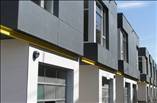 neighborhood just north of Denver's central business district. The resident profile is as eclectic as the unit mix. Many operate businesses from their homes, including many people from the creative fields." Join ULI!
Good for Urban Development: Double the Smarties
[youtube=http://www.youtube.com/watch?v=_tZ24GyFhDY]From reader Chavela Gonzalez, USA Today reports: "In more than two-thirds of the nation's 51 largest cities, the young, college-educated population in the past decade grew twice as fast within 3 miles of the urban center as in the rest of the metropolitan area — up an average 26% compared with 13% in other parts. In 2000, young adults with a four-year degree were about 61% more likely to live in close-in urban neighborhoods than their less-educated counterparts. Now, they are about 94% more likely. 'This is a real glimmer of hope,' says Carol Coletta, head of CEOs for Cities, a non-profit consortium of city leaders that commissioned the research. 'Clearly, the next generation of Americans is looking for different kinds of lifestyles — walkable, art, culture, entertainment.'" In my city, Miami, the number of 25- to 35-year-olds with a college degree in downtown increased 68%. This bodes well for urban real estate development, which will need to be channeled into its most sustainable form: small, attached, prototypical, adaptable-use buildings. Full article here, unrelated video via Jonathan Miller.
Behind the Townhouse: Space 4 Architecture
 Michele Busiri-Vici of Space 4 Architecture graciously sent me some photos of their townhouse renovation completed in 2010, as well as some insights into their design: "The client used to live in an open loft in Tribeca. Our motto for the project was 'a loft on 4 floors'. We achieved that with the open-ness of the floor plans, continuous visual connection between floors, and no boundaries between inside and outside at the ground floor – the glass wall can be raised to open the kitchen and garden into a continuous space.
"The rear elevation is composed of two concrete side walls, exposed blackened steel beams at each floor, and in between floor-to-ceiling, wall-to-wall glass, framed with wood. I like to be true with my design, therefore I love showing the structure when possible. From outside you see the exact volume of each floor, as clean and clear as possible. I hate return walls or as they sometimes call them, 'cheek' walls. The materials have weathered very well. I like the wood frames around the glazing better now than when they were installed. Of course privacy was an issue, so we specified huge motorized shades, solar and blackout, for each room.
Michele Busiri-Vici of Space 4 Architecture graciously sent me some photos of their townhouse renovation completed in 2010, as well as some insights into their design: "The client used to live in an open loft in Tribeca. Our motto for the project was 'a loft on 4 floors'. We achieved that with the open-ness of the floor plans, continuous visual connection between floors, and no boundaries between inside and outside at the ground floor – the glass wall can be raised to open the kitchen and garden into a continuous space.
"The rear elevation is composed of two concrete side walls, exposed blackened steel beams at each floor, and in between floor-to-ceiling, wall-to-wall glass, framed with wood. I like to be true with my design, therefore I love showing the structure when possible. From outside you see the exact volume of each floor, as clean and clear as possible. I hate return walls or as they sometimes call them, 'cheek' walls. The materials have weathered very well. I like the wood frames around the glazing better now than when they were installed. Of course privacy was an issue, so we specified huge motorized shades, solar and blackout, for each room.
"The facade is traditional and the client wanted to keep it that way. We liked the idea of having such a facade and then walking into a completely different space. Therefore when adding the 4th floor we matched the facade details of the floors below. We painted the whole facade a dark grey, just to make it a bit rock-n-roll."
Small & Urban in Miami: MDC Culinary Building
 Miami Dade College recently completed a new building at the downtown campus for its Miami Culinary Institute. Lest you think Townhouse Center is becoming a first-rate food blog, I will explain: the building is the first new small, attached building in downtown Miami in years. Designed by PBSJ with interiors by STA Architectural Group, it is 50 ft wide and 8 stories tall, see photos in the Flickr pool. The designers and contractors struggled with, and solved, the challenges of building on a tight spot between existing buildings, requiring efficient floorplans and vertical circulation. Last week, the Director of MCI, John Richards, gave me a tour and explained that at first they thought the small footprint would be limiting, but then they realized that smaller class sizes and efficient use of resources would be key to the program's identity. The building is completing its LEED certification, and is on track to be gold. Equipped with state-of-the-art video and internet capabilities so chefs from around the world can teach virtually, is it the New World Center of food? Regardless, the Miami Culinary Institute building is a reminder that large contributions to urban culture do not require large "black swan" buildings like stadiums and conference centers.
Julianne Moore for Traditional Cities?
 From a blog called New World Economics by Nathan Lewis, an excerpt of his post on March 20, 2011: "Where did Suburban Hell come from? Why do we keep making it? Surprisingly, the answer is mostly irrational. We did it because we like farmhouses. It is just a fascination, the way some people like cats. We need to be able to start to envision what our life in the Traditional City might be like, and to be able to say, yes, that is even better than a farmhouse, an SUV, and a 90-minute commute. Maybe the best way to do this is to take specific example, courtesy of the actress Julianne Moore. JM's house is for sale. If you were to say to Mr. Suburban Hell, 'What do you think of living in Greenwich Village, in a big old brownstone with a big backyard, next door to Julianne Moore?' Little different proposition, eh? You have to make the mental step -- it is only a mental step, there is no physical component -- from the Suburban Hell picture in your head to a Traditional City picture in your head. Then, 2200 square feet with no car isn't an unendurable hardship, it is the pinnacle of luxe." At the end of the post are links to dozens more by Mr. Lewis on the subject of the Traditional City.
Skinny Townhouses: Pet Architecture in NYC
 Small, narrow buildings on leftover space between larger ones -- called "pet architecture" in the book by Studio Bow-Wow -- are the subject of recent posts on the blog Scouting New York. Regarding 420 W 58 St pictured: "Exactly half a brownstone (12.5 feet), gloriously smooshed between two much larger apartment buildings. A number of readers have written me that the city used to sell lots in 25′ increments, and that developers would sometimes build two 'twin' houses, each measuring 12.5′, on a single property." Regarding 19 W 46 St: "This renovated brownstone, wedged between two much larger buildings, is only 12.5 feet wide and does not connect with either of the neighboring properties. The popular Turkish restaurant Akdeniz is on the bottom floor, while the second floor is occupied by the Antonio and Antoinette Beauty Salon. I was told that the upper floors are all apartments." But the skinniest building in New York City, according to The Real Deal, is 75 1/2 Bedford St: "75½ is only nine-and-a-half-feet wide on the outside, eight-and-a-half-feet wide on the inside, and 32 feet deep. Each of the four floors, including the basement, measures less than 300 square feet. The list of former owners and renters reads like a who's who of New York. There's the cartoonist William Steig and the anthropologist Margaret Mead. But the home's most notable resident, and the name etched into the plaque on its façade, is Edna St. Vincent Millay, the Pulitzer Prize-winning poet."
Dwell Magazine Reports on Townhouses
 The latest issue of Dwell includes an article -- not available online so subscribe already! -- by Aaron Britt about the 100K House two-townhouse project designed by Interface Studio Architects and developed by Postgreen Homes in Philadelphia's East Kensington neighborhood. Teaser: "East Kensington's cashe of cheap, vacant lots, proximity to the hip Fishtown neighborhood, and nearby public transit make it an ideal laboratory for inexpensive urbanity. 'The box comes first!' was both a rallying cry during the design phase and a fact of life during construction. 'If we do a little less, can that actually be cooler than cheaping out?', said Brian Philips of Interface. What's not visible from the street, though, is the LEED Platinum certification -- or its 2010 LEED for Homes Project of the Year award. But the real selling point is that the 100K House came in at just $81 per square foot in construction costs. 'Until pretty recently, people imagined that the value of a home was tied to large square footage', says developer Courtney Ludeman, but Postgreen's thinking -- perpetually that of a citizen-developer -- extends beyond what it takes to make a sustainable home to what it takes to make a sustainable East Kensington." The issue also includes a photo of the 9-townhouse Cemetery Road project in Sheffield, England designed by Project Orange, so subscribe to Dwell already!
Apartment Therapy Reports on Shophouses
 Shophouses may be reaching Sheen-esque over-exposure: after spreading to the Balkans and the U.S. (at least Austin), shophouses are getting love from Apartment Therapy writer Anne Reagan: "Much like the bay window defines San Francisco or the brownstone defines New York, the Singapore shophouse represents not only an important architectural style but a way of life from this country’s past. Traditionally the first floor or ground level was used as the place to conduct business. The 'five-foot way' ensures a covered area for the shoppers to peruse and protects people and goods from strong sun and rain. Farther back on the ground level, behind the shop area, would be the family kitchen. The second floor would usually be the family rooms and sleeping quarters. As the population grew and changed, the purpose of the shophouse changed with it. Some became funeral parlours, clubhouses for wealthy businessmen, and many were divided into multiple businesses such as coffeehouses and tailor shops. I gathered much of the above information from reading Singapore Shophouse (published by the National Archives of Singapore). If you can’t visit Singapore in person be sure to check out some modern uses of the old shophouse like the Scarlet Hotel [pictured], 149 Neil Road conservation house, The Saff Hotel, and Hotel 1929." Full article here.
Thai Shopouse Art Gallery Wins Restoration Award
 From Bangok Post writer Pattara Danutra: "A new provincial art gallery was launched in February in Ratchaburi's Muang district, about 120km from Bangkok. Its odd name, Tao Hong Tai: d Kunst, represents the dual background of its owner, Wasinburee Sukpanichvoraparch. The building of Tao Hong Tai: d Kunst is an artwork itself. Only a few days after its inauguration, this historical structure was honoured by the Association of Siamese Architects for its distinguished effort in restoring old architecture. Combining wood, concrete and metal as raw materials, this three-storey structure has been modified from a two-storey Sino-Portuguese shophouse, with a history that can be traced to the reign of King Rama V. Chatree Ladalalitsakul, the architect supervising the renovation process, is a member of the team which designed the new parliament office and is a regular award winner in the category of traditional-style architecture. Its first floor comprises volumes of art publications for free reading. The second is a small cafe and a corner for memorabilia, including a selection of ceramic items. Meanwhile, half of the third floor is a room for the in-residence artist." Full article here.
Rowhouse Magazine on Pomander Row in Washington
 From the original rowhouse website, RowHouse Magazine, and its founder Suzanne Dreitlein: "Behind the Georgetown house where John and Elizabeth Edwards lived, there is a quaint row of small homes called Pomander Walk. According to Urban Turf D.C., 'one-bedroom houses are a rare niche product of 19th century D.C., built to house workers who needed small, cheap living options.' These small treasures not only preserve historic architecture but offer modest-income homeowners a chance to purchase a home in more exclusive neighborhoods. As with many historic dwellings, sometimes a dream house does not come in dream house condition. Fortunately, a historic, brick row house is a great starting point for anyone who wants to turn a row house in the city into a cozy and welcoming home." Full article here.
Madrid Townhouses & Almuradiel Prototype Housing
 My recent visit to Madrid revealed only a few townhouse neighborhoods, but the day before I flew home, the folks at Estudio Entresitio graciously made some time for me to discuss their projects and design philosophy: applying simple geometric rules to create spaces that assemble into a unified design. They have designed a pair of townhouses in Madrid, but more interesting is their 43 Viviendas project in Almuradiel, Ciudad Real, which was designed by applying geometric rules to break a large site into 43 townhouses, and each townhouse into spaces and voids. But they also applied a human touch, differentiating north- and south-facing units to maximize daylight.
Shophouses Spread to Austin, Texas
 I posted about shophouses spreading to the Balkans, and recently there has been speculation that ShopHouse may be coming to cities across the U.S., but one place they are definitely planned is Austin, Texas, according to local real estate agent Garreth Wilcock. From a post on Activerain.com: "Mueller, Austin TX is a mixed-use urban infill project built at the site of the old international airport. The guiding Design Handbook was a collaboration between many members of the surrounding neighborhoods, [master developer Catellus, Roma Design Group] and the City who owned the land, and includes specification for Mueller Shop Houses. The shop houses are estimated to be three stories tall, with retail space below and residential space above." From Mr. Wilcock's blog: "According to the design book, lot sizes will be 55×25 feet. The Mueller Design Book has them placed on the north-south transit boulevard and also in the Mueller Town Center. The theory is that the wider street will have businesses to promote different activity and engagement. They will also cut down on transportation needs if they are walkable, not to mention those commute trips that are now vertical rather than vehicular."
The Los Angeles Model: Mixed-Use Townhouse
 From Contemporist.com, a gallery of a townhouse in the Venice neighborhood of Los Angeles, California, designed by Dennis Gibbens Architects. From the architect's website: "This mixed-use project is situated in the middle of a stretch along the boulevard known for its many recent examples of architectural experimentation. The ground floor houses parking and a single retail tenant; the two upper floors contain a single-family residence. The public residential spaces are on the second floor surrounding a private courtyard. The third floor contains bedrooms and a large exterior dining and entertainment deck. The entire shell of the building is constructed of board-formed poured-in-place concrete. Other exterior walls are glass or stucco – non-corrosive materials practical for their use near the ocean."
Singapore Shophouse Cooling Features Explained
 From iProperty.com writer Samantha Loveridge: "Julian Davison, author of the recently launched book The Singapore Shophouse, marvels at the architectural ingenuity of these shophouses’ air well feature: an open column that ran through the whole house and created a cooling system. 'There’s usually a water feature at the bottom of the airwell too,' which, Julian explains, 'added to the cooling quality of the house.' The floors would have been made from terracotta tiles where the airwell came in. These terracotta tiles would be laid straight on to the earth. This wasn’t done for speed or cost, 'the cool moisture of the earth rises through and keeps the tiles cool', says Julian. Very little is actually known about the people that created shophouses. One man, Wee Teck Moh, whom Julian calls the 'Shophouse King', worked from 1890 to 1911 and created hundreds of shophouses. All that is known of him now though is his signature on the architectural specifications." Full article here.
Urban Land Magazine Again Touts Small Development
 After its cover story on the wisdom of small-scale development (the issue also included an article profiling 10 small-scale infill housing projects, and another article on small-scale adaptive reuse), Urban Land magazine returns to the topic in this week's email newsletter with an article titled "Small & Smart" by Kristina Kessler: "Though small mixed-use infill projects do not fit most institutional investor business models, there is a market for compact, mixed-use design and smaller housing space. With some 3 million acres (1.2 million ha) of greyfield sites becoming available for redevelopment and some 20 million attached housing units needed by 2025, this project type is being increasingly favored by the planning and development industry for its scale and innovative design. Contemporary urban infill housing can weave new units into existing urban environments, with street-level uses ranging from retail space and offices to clinics, and even a Walgreens store. A number of municipalities are turning their focus toward redevelopment and infill and partnering with smaller lenders and borrowers." Full article here (requires ULI membership).
Non-Urban Townhouses in Albany Pros & Cons
 Some townhouse projects have a feature or two that are not quite urban. Astute readers will note that the 2010 Slow Home Award-winning townhouses don't actually face a street. Now the Albany Times Union's Chris Churchill writes about the Lofts at Bryn Mawr, sturdy brick townhouses in Albany, New York that were designed by 3T Architects and won an award form the local AIA, but according to Google Maps the townhouses are in a suburban neighborhood next to an office park. What are the pros? Suburban townhouses can help increase the number of people who are comfortable living in attached buildings, and serve as examples for financing urban townhouses. Furthermore, I hunted around Lofts developer Crisafulli Associates' website and found that they are currently constructing a more urban townhouse development: the Townhouses at Center Square, rendering above.
Madrid's El Viso Neighborhood Townhouse Styles
 I recently had the chance to visit Madrid, and Francisco Garcia, Miami's Planning Director, suggested that I check out his childhood neighborhood, El Viso, which I did and added the photos to the Flickr pool (including map). Mr. Garcia told me that the neighborhood was built by Spain's dictator Franco as an urban edge community, and then Madrid grew up around it. In a city that has few continuous townhouse neighborhoods, El Viso an exception (though it is almost exclusively residential) and is composed of groups of three units in a pseudo-traditional style, groups of four units in a modern style with half-circle bays at the ends, and blocks of wide, tall, unadorned houses that happen to be attached.
Incremental Housing Strategy in India
 Another oldie but goodie from reader Natalie Weinberger, originally reported by ArchDaily writer David Basulto: "In developing countries, almost all construction is done by anyone but architects. In these countries architects can develop strategies together with communities to achieve housing solutions that address today's necessities and can be extended as families grow, once again without architects. In Bombay, a team of international architects, urban planners, landscape architects, and graphic designers volunteered to set up a strategy that uses existing urban formations as the starting point for development, and existing social networks are respected. Each family is free to choose one of the three incremental prototypes, and all prototypes need the participation of the community to emerge. After the reinforced concrete structure is up, the families can help by placing windows, doors, and tiles, and painting. " Key participants were Sheela Patel and Jockin Arputham of SPARC and Filipe Balestra and Sara Göransson of Urban Nouveau. Full post here with lots of images.
Townhouses Win for Housing in Mouvaux, France
 Loyal reader and inspiring writer Natalie Weinberger recently reminded us of a past but interesting competition (reported by Dezeen.com writer Chris Barnes): "Paris studio LAN Architecture have won a competition to design a residential complex for Mouvaux, France. The 117 residential units will be clad in various patterns of brickwork, visually breaking the development down into smaller elements." From the architects: "Analysis of uses and architecture types composing the urban morphology of Mouvaux quickly led us towards the conception of a hybrid model, an intermediate housing environment able to accommodate desire for intimacy as well as sociability. This choice is legitimated by the scale of the construction already composing the district and the city’s fabric. The relation between the container and the content is inverted and the new buildings become tools for defining public spaces." It is unclear if the project is moving forward (developers were said to be Acarat Groupe, Groupe GHI, and Notre Logis) but the principles and concept are instructive. Full post here.